Ship Decarbonization: Impact on Marine Engine Parts and Global Spare Parts Supply
Decarbonization makes reliable marine engine parts critical. Stay compliant with BAS KOREA’s expert global sourcing and spare parts.
Ship Decarbonization: Navigating Technical Shifts in Marine Engine Parts and Global Spare Parts Supply
The global shipping industry, responsible for over 80% of world trade, is currently at a historical turning point: the transition to carbon neutrality. Stringent greenhouse gas (GHG) regulations led by the International Maritime Organization (IMO) and the European Union (EU) are fundamentally restructuring traditional fossil fuel-based operations. This shift impacts everything from vessel design and engine architecture to the supply chains for marine engine parts and marine spare parts.
As a leading marine spare parts supplier, BAS KOREA analyzes the technical requirements of these regulations and the critical role of reliable marine equipment supply in ensuring vessel performance and regulatory compliance during this era of decarbonization.
1. Global Maritime Regulations Driving Decarbonization
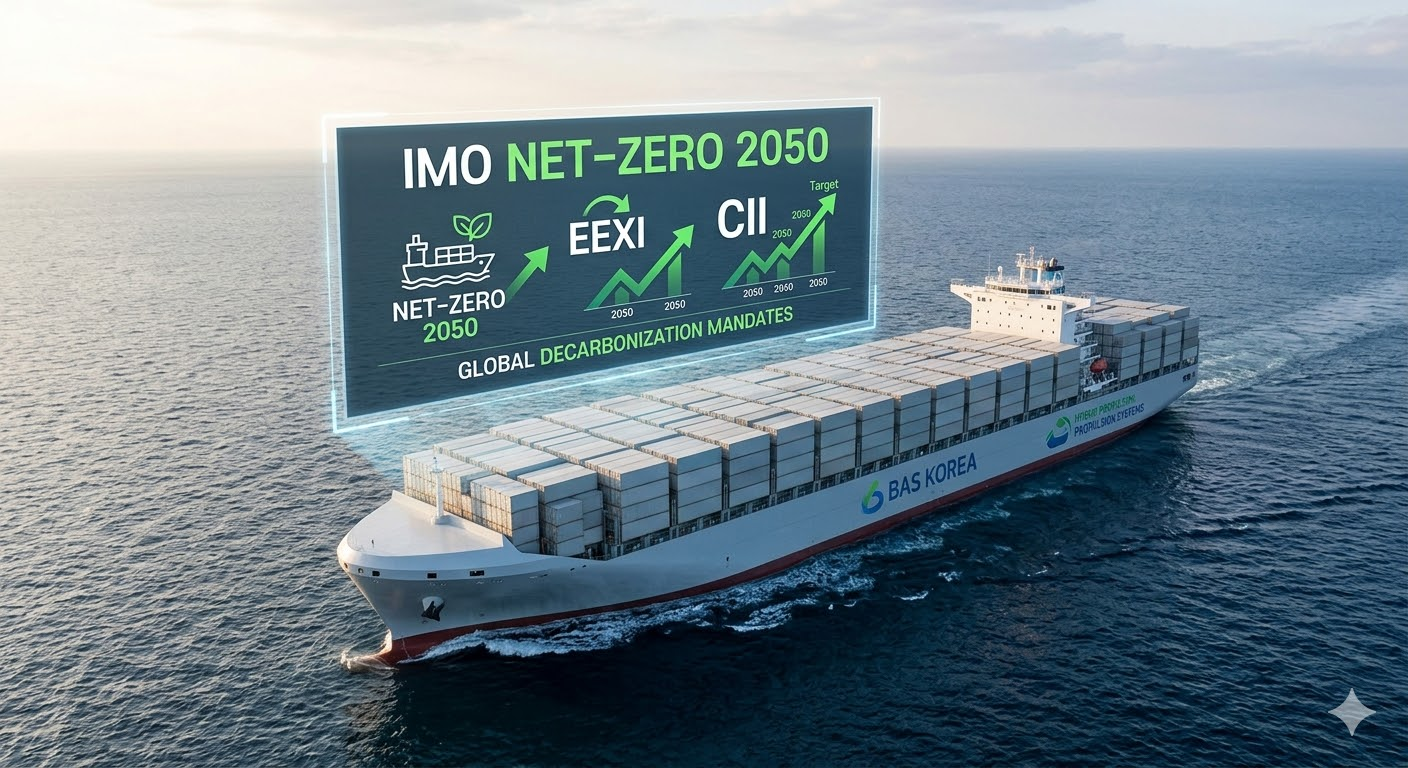
Decarbonization is no longer a choice but a legal obligation enforced by international frameworks. The IMO’s 2023 GHG Strategy, adopted at MEPC 80, has significantly accelerated the industry's timeline.
IMO 2023 GHG Strategy and Targets
The 2023 strategy aims for international shipping to reach net-zero GHG emissions by or around 2050. To ensure progress, the IMO introduced "Indicative Checkpoints" for 2030 and 2040.
Category Target Year Details Checkpoint 1 2030 Reduce total annual GHG emissions by at least 20%, striving for 30% (vs. 2008) Checkpoint 2 2040 Reduce total annual GHG emissions by at least 70%, striving for 80% (vs. 2008) Energy Efficiency 2030 Reduce CO2 emissions per transport work by at least 40% Technology Uptake 2030 Zero or near-zero GHG technologies/fuels to represent 5–10% of energy used
EEXI and CII: Operational Efficiency Standards
For existing vessels, compliance is measured through the Energy Efficiency Existing Ship Index (EEXI) and the Carbon Intensity Indicator (CII). While EEXI is a technical measure of a ship’s design efficiency, CII is an operational measure based on actual fuel consumption and distance traveled. Vessels are rated from A to E; those receiving a D for three consecutive years or an E in a single year must submit a corrective action plan within their Ship Energy Efficiency Management Plan (SEEMP).
EU Regional Regulations: ETS and FuelEU Maritime
The European Union has implemented even stricter regional measures:
EU ETS (Emissions Trading System): From 2024, ships over 5,000 GT must purchase allowances for GHG emissions within EU ports and 50% of voyages connecting to non-EU ports.
FuelEU Maritime: Effective January 2025, this regulation limits the annual average GHG intensity of energy used on board, starting with a 2% reduction and accelerating to 80% by 2050.
2. Technical Evolution of Decarbonization Technologies
Compliance requires the adoption of alternative fuels and Energy Saving Devices (ESDs), which in turn increases the technical complexity of ship parts.
Dual-Fuel Engines: Methanol and LNG
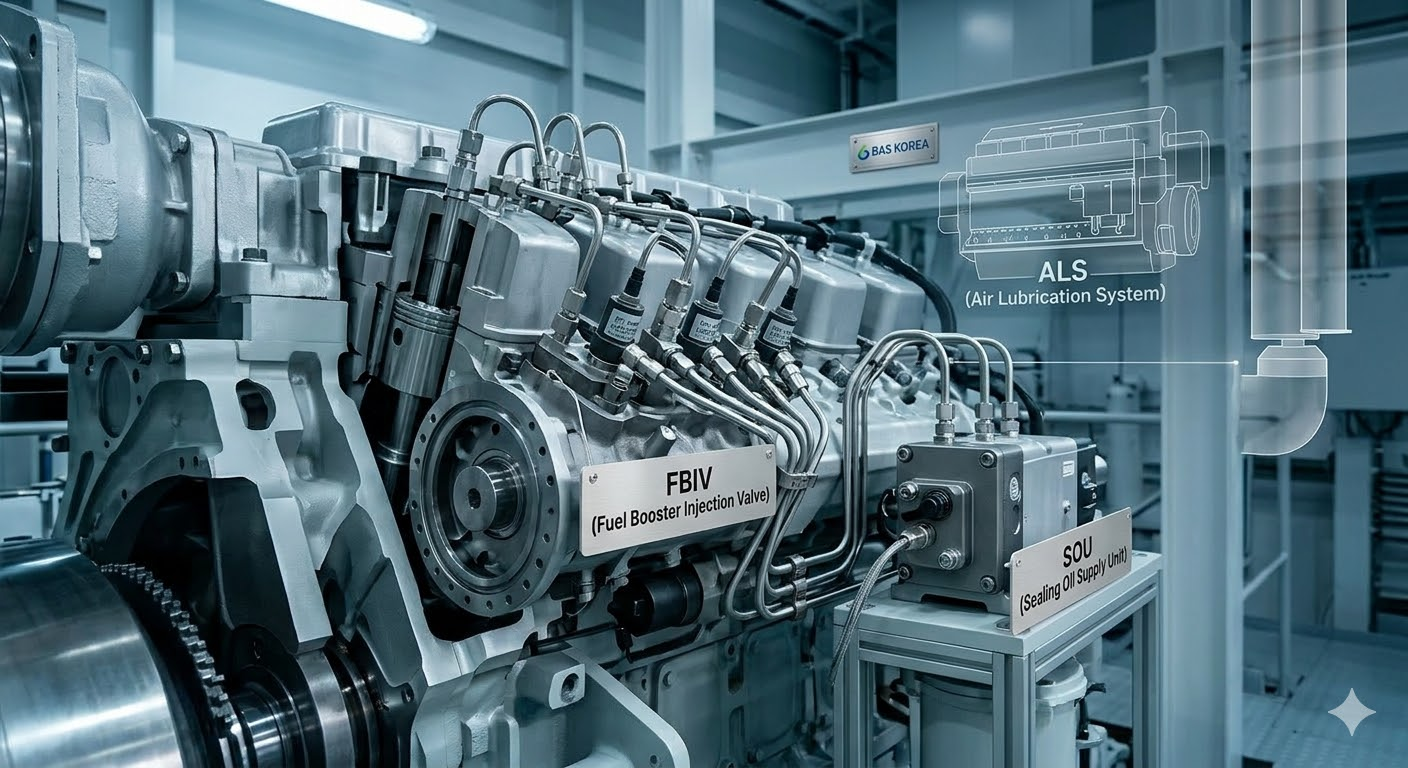
Methanol and LNG are currently the most viable dual-fuel (DF) options. LNG reduces CO2 emissions by up to 25%, while green methanol can achieve net-zero lifecycle emissions. However, these engines require specialized marine engine parts:
Fuel Booster Injection Valve (FBIV): A critical component for high-pressure methanol injection. It features a complex sealing structure to isolate methanol from control and sealing oils.
Sealing Oil Unit (SOU): Supplies oil at 40–80 bar to lubricate FBIV moving parts and prevent fuel mixing.
Double-Walled Piping: Mandated by the IGF Code for low-flashpoint fuels to prevent leaks. The annular space is monitored by hydrocarbon sensors and purged with nitrogen.
Wind-Assisted Propulsion: Rotor Sails
Rotor sails utilize the Magnus Effect to generate auxiliary thrust from wind. Operational data indicates fuel savings of 4% to 15%, with up to 25% possible in optimal wind conditions. Maintenance for these systems focuses on large-scale bearings, electric drive motors, and wind sensors.
Air Lubrication System (ALS)
ALS reduces drag by releasing microbubbles along the hull, achieving 5% to 15% fuel savings. Maintaining ALS requires high-capacity air compressors, oil-water separators to prevent ocean contamination, and precision air filters to prevent nozzle clogging.
3. The Growing Importance of Reliable Marine Spare Parts
Reliable marine equipment supply is critical for maintaining performance and ensuring that vessels remain within their regulatory ratings.
Engine Power Limitation (EPL) and ShaPoLi
Many shipowners utilize Engine Power Limitation (EPL) or Shaft Power Limitation (ShaPoLi) to meet EEXI requirements without permanent engine de-rating. Technical components for these systems include:
Mechanical Blockage: Sealed devices that physically limit the fuel rack.
Override Switches: Required for safety, allowing the crew to use reserve power in emergencies, provided it is logged and reported to authorities.
Torque Meters: High-precision sensors that measure real-time shaft power for ShaPoLi systems.
Supply Chain Challenges and Strategic Sourcing
The increasing technical complexity and global demand for eco-friendly retrofits have created several supply chain challenges:
Extended Lead Times: Demand for specialized components from approved OEMs often exceeds production capacity.
Strict Certification: Parts for low-flashpoint systems must be certified by major classification societies (DNV, LR, KR, etc.) to ensure safety and compliance.
Strategic Procurement: Shipowners are moving from reactive to proactive procurement to avoid project delays during dry-docking and retrofitting.
4. BAS KOREA: Supporting Operators in the Decarbonization Era

As a specialized trading company for marine spare parts and engine equipment, BAS KOREA supports shipowners and shipyards by bridging the gap between global suppliers and local technical needs.
Global Sourcing Expertise: BAS KOREA identifies and sources high-quality marine engine parts from a verified global network, reducing lead times and ensuring competitive pricing.
Technical Accuracy: We leverage engine plate numbers and technical manuals to ensure that every spare part—from fuel injectors to compressor seals—is compatible with specific engine models such as MAN B&W or WinGD.
Quality and Compliance: We focus on supplying parts that meet the rigorous safety and environmental standards required by the latest IMO and EU regulations.
Conclusion
Ship decarbonization is fundamentally changing the landscape of the maritime industry. While technologies like dual-fuel engines and energy-saving devices offer a path to net-zero, their success depends on the continuous and reliable supply of high-precision marine spare parts.
In this era, marine equipment supply is no longer just a logistics task; it is a strategic element of asset management. Partnering with a professional marine spare parts supplier like BAS KOREA allows operators to maintain their carbon ratings, ensure crew safety, and maximize the operational lifespan of their vessels in a rapidly changing regulatory environment.
For inquiries regarding the supply of marine engine parts and global spare parts sourcing, please contact BAS KOREA.